Fifteen Years at Wharariki Beach: A Photographer's Guide to New Zealand's Wild Coast
Wharariki Beach has been one of my north–South Island obsessions for the past 15 years. In that time, I’ve watched the light, the sand, the sea stacks and the people change in subtle and sometimes dramatic ways, all while the raw, wild character of the place remains unmistakable. This blog collects what I’ve learned photographing Wharariki from short winter afternoons to long summer twilights, practical techniques, creative approaches, environmental changes I’ve observed, and how to get the most from this iconic New Zealand coastline.
Why Wharariki?
Dramatic subject matter: towering rock stacks and natural arches rise straight out of the surf, giving photographers powerful central motifs.
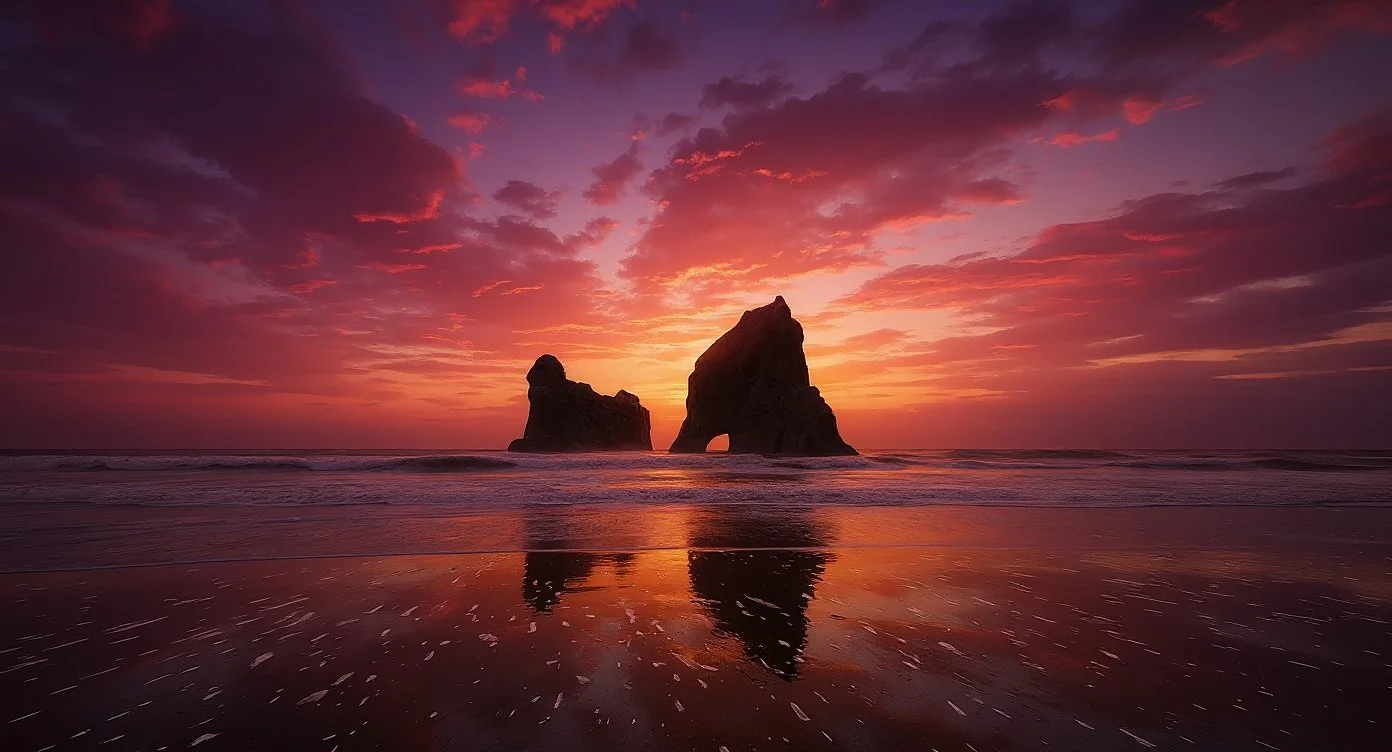
Reflective tidal flats: at low tide the wide expanse of wet sand creates mirror-like reflections, multiplying compositions and colour.
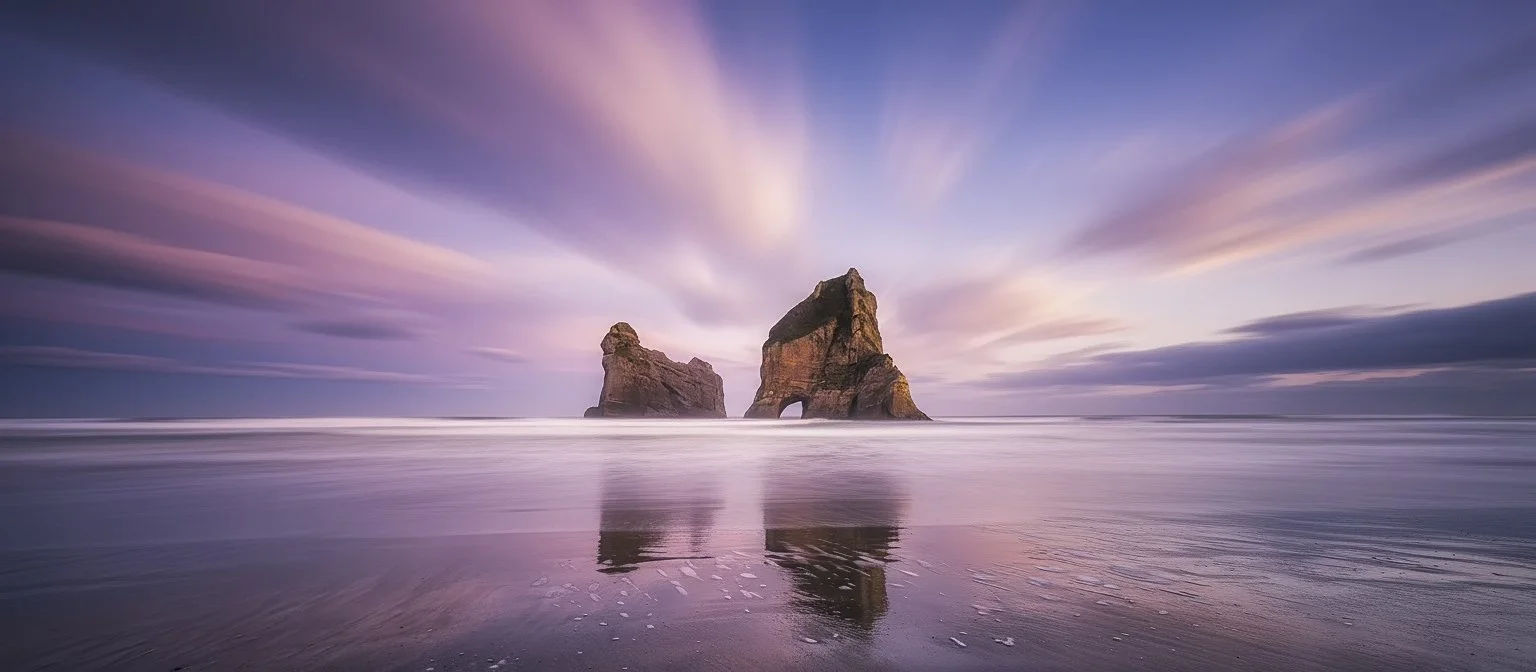
Constant motion: wind-swept clouds and restless ocean give long exposures a painterly quality, and strong winds sculpt interesting wave patterns.
Accessibility and wildness: a short walk from the car park leads to a big, open beach that still feels remote, perfect for landscape photography.
Wildlife and atmosphere: resident fur seals and abundant birdlife add dynamic elements and a sense of place.
How the place has changed, and stayed the same
Erosion and stack shape: Over 15 years I’ve noticed gradual reshaping of the stacks and arches. Small pieces shed in storms, large-scale changes are slow but visible if you revisit regularly. This is a reminder to photograph what you see now, geological features evolve.
Visitor patterns: The beach is more popular than a decade and a half ago. Social media and photography blogs have increased visitation, more tripods in the frame, but because the beach is large you can still find quiet angles, especially if you visit off-peak or walk further along the shore.
Conservation and access: Local efforts to manage foot traffic and protect fragile dunes have improved paths and signage. Stick to the designated track to help preserve native vegetation.
Weather patterns: Climate variability means some seasons produce calmer, pastel sunsets while others bring dramatic storm fronts and high surf. Both are photographic gold, different moods, same place.
Wildlife behaviour: Fur seal visibility is generally steady, their haul-out spots can shift with tide and season. Respect distance and behaviour, they are wild animals.

Seasonal considerations
Summer (Dec–Feb): Longer evenings give extended golden hour and late pastel skies. The beach can be busier and the weather can be deceptively changeable. Tides are predictable but watch for quick-moving swells.
Autumn (Mar–May): Great colour and dramatic storms. Cooler light and fewer crowds make long-exposure seascapes easier.
Winter (Jun–Aug): Moody skies, low sun angles and strong frontal systems often create epic scenes. Temperatures and wind can be harsh, dress in layers and protect gear from spray.
Spring (Sep–Nov): Transitions, good for wildlife (pupping seasons) and variable weather that creates dramatic cloudscapes.
Gear and setup
Camera: Full-frame DSLRs or mirrorless give flexibility in dynamic range and high ISO performance. APS-C works fine too.
Lenses: 16–35mm or 14–24mm for dramatic wide vistas and foreground reflections. A 24–70mm for mid-range compositions. A 70–200mm can isolate stacks or wildlife.
Tripod: Essential for long exposures and low-light work, bring a sturdy, wind-resistant model and a low centre-of-gravity setup.
Filters: Neutral density (6–10 stop) for long exposures to smooth water and streak clouds, a 3–stop ND helps for moderate smoothing. Circular polariser for reducing glare and boosting sky contrast, but avoid heavy polarisation when shooting reflections you want to keep.
Remote release or cable: To prevent camera shake.
Protection: Rain cover for camera, lens cloths, and silica packs for moisture. Sandproof bags for storage.
Footwear: Waterproof boots are invaluable, sand and cold water are common.
Compositional tips
Use reflections: At low tide, place your foreground reflection low in the frame and align the stack’s reflection precisely for symmetry, or offset it for a more dynamic composition.
Foreground interest: Driftwood, small rock pools, foam lines, and patterns in the sand create depth. Get low to emphasise foreground textures and lead the eye to the stacks.
Scale: Include a person or seal for scale to express the enormity of the stacks, but maintain respectful distance from wildlife.
The arch: The natural arch makes a powerful subject, time your shot for when waves and light frame the opening.
Rule of thirds and negative space: The vast sky and beach invite minimalist framing. Leaving space for motion-filled clouds can accentuate mood.
Multiple focal lengths: Don’t commit to one perspective, shoot wide for drama, mid-range for structure, and tele for texture or wildlife.
Exposure and technical settings
Long exposures: 1–4+ seconds for smoothing waves, 20–60 seconds with heavy ND to create silk water and streaked clouds. Use live view to compose and check histogram.
Bracketing and HDR: When dynamic range is very high (bright sky, dark foreground), bracket exposures or use exposure blending for best results.
ISO and aperture: Keep ISO low (100–200) for maximum quality; aperture f/8–f/11 for sharpness with landscape lenses, but stop down more if you need longer exposures without an ND.
Focus stacking: For ultra-sharp foreground-to-background scenes, take 2–3 frames at different focus points and blend in post.
RAW: Always shoot RAW, the scene’s subtle tones and shadow detail are easier to recover.
Creative approaches
Long-exposure abstracts: Use strong NDs to turn the kinetic surf into glass and the clouds into soft streaks, this emphasises the sculptural form of the stacks.
Black and white: The monochrome conversion works wonderfully with stormy skies and dramatic texture, think Ansel Adams-esque tonality.
Panoramas: A multi-shot panorama can capture the breadth of the beach and entire skyline in fine detail.
Golden hour and blue hour: Don’t leave immediately after sunset, the best colours often linger into blue hour and reflect beautifully on the flats.
Dealing with challenges
Wind: It’s often extremely windy. Anchor the tripod, use low angling, and brace by placing a camera bag on the legs. Protect filters and lens front from grit.
Spray and sand: Spray will get on filters and lenses. Carry lens cloths and frequently check your glass. Change lenses as little as possible and avoid low-angle drafts.
Fast tides: Tidal flats can change quickly. Know tide times and avoid getting stranded on rocks. Walk back toward the marked track rather than shortcuts.
Crowds: If there are too many people near the car park, walk east or west along the beach, ten minutes of strolling removes most people from foregrounds.
Ethics and safety
Respect wildlife: Keep distance from fur seals, they can be defensive. Use telephoto lenses rather than approaching.
Stay on the track: Dune vegetation is fragile, keep to paths to protect habitat.
Leave no trace: Pack out all rubbish, and avoid disturbing driftwood or natural features.
Personal safety: Wear appropriate footwear, layers, and check weather and tide before you go. Mobile signal can be unreliable.
What to expect on repeat visits
Different moods: Come back across seasons and weather, the same stack can present vastly different stories: serene and pastel, or jagged and stormy.
Incremental changes: Revisit locations and compare frames from different years to watch the coastline evolve, a powerful reminder of nature’s constant change.
Growing portfolio: Over time you’ll discover compositions nobody else has shot, unusual angles, micro-foreground features, and special light moments.
Sample shot list for a day
Pre-dawn: Arrive before sunrise for clear skies and quiet reflection shots, wide-angle, low vantage.
Sunrise: Capture warm rim-light on the stacks, use 1–5s exposures to soften waves.
Midday: Use telephoto to isolate details and seals, polariser to deepen skies.
Golden hour: Mirror-symmetric reflection shots on tidal flats.
Sunset and blue hour: Long exposures with heavy ND to create ethereal water and streaked clouds, bracket for HDR if necessary.
Night: If conditions allow, capture star trails or the Milky Way (season dependent) with foreground illumination.
Post-processing suggestions
Raw development: Emphasise the midtones and preserve highlights in the sky, gentle contrast and clarity adjustments bring out rock texture.
Colour grading: Warmth during sunrise and sunset, but keep balance, Wharariki’s subtle pastels are part of its charm.
Retouching: Remove minor distractions like footprints or stray plastic if they harm the composition, don’t over-sanitise natural textures.
Sharpening and noise reduction: Apply selectively, long exposures and sky areas often need smoothing while stacks and foreground need crispness.
Final thoughts Wharariki Beach rewards patience and curiosity. Over 15 years I’ve learned that the most memorable images often come from waiting through a storm, exploring unfamiliar angles, or getting out there during the shoulder seasons when light and solitude align. Photographing the beach is not only about technique, but about showing up, reading the tides and weather, and respecting the fragile landscape and its inhabitants.
If you plan a trip, check tide times, bring windproof clothing, sturdy footwear, plus cloths and protection for your gear. If you’d like, share your shots and I’m happy to offer feedback on composition and post-processing specific to images you captured at Wharariki.